
Global Humanitaria works with women’s groups to improve food and nutritional security, promoting cultivation in backyard gardens and giving workshops on alternatives to the preparation of food within their reach.
Thus, the person responsible for the “Healthy Homes” program, in coordination with the Secretariat of Food and Nutrition Security and the Ministry of Agriculture, Livestock and Food, prepared balanced nutritious menus to make with the 38 participating families and food hygiene habits were reinforced. , such as washing hands and food. The main types of food contamination (physical, chemical and biological), their causes and consequences are also indicated.
The menus prepared in a first intervention in the El Caoba community were three :
→ chipilín buns (legume plant), with bean buns and pineapple jam and pineapple peel-based soft drink.
→ empanadas with beet, chard and carrot, stuffed with potato with chaya (spinach) and lemon soda.
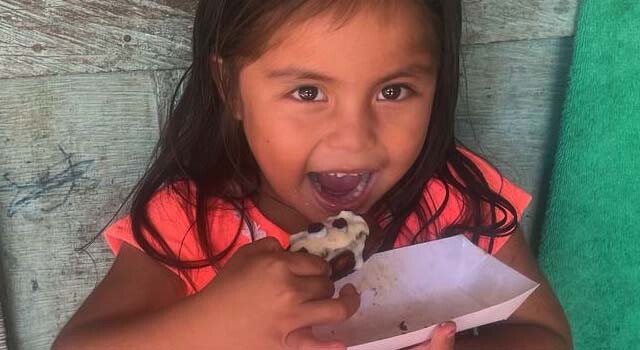
→ canoes filled with delicacy with oatmeal soda, as a different way of consuming the bananas they grow and milk with sugar, like the ones we see in the images.
Healthy homes
Likewise, in both El Caoba and Quebrada Seca , we carry out follow-up visits to the participating families, to see how they are putting into practice what they have learned in the sessions taught in the Healthy Homes program on:
→ how to store food properly and where.
→ the treatment of water for consumption (disinfection by boiling or chlorination).
→ the use and cleaning of ecofilters.
→ maintenance of latrines and the incorporation of lime or ash to reduce bad odors.
→ the separation of organic waste for making fertilizers and inorganic material for recycling.
Recent Comments