
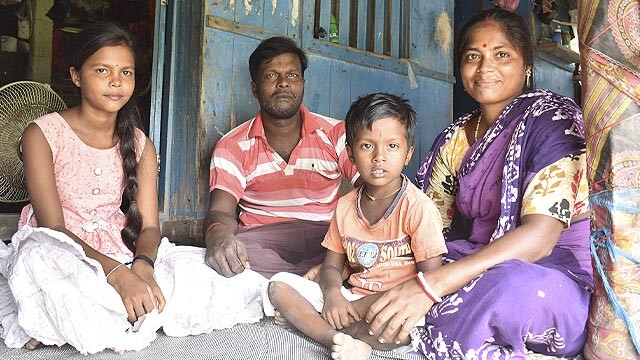
Anamika is 35 years old and participates in the Woman-to-Woman program run by Global Humanitaria in India. At the Mridha Para school on Kumirmari Island, she attends classes to learn to read and write, as well as sessions on hygiene, nutrition, health, and rights. The program includes a second phase of entrepreneurship training and specialized gynecological care for the approximately 220 enrolled students.
“I couldn’t go to school,” says Anamika, “because my parents were very poor and my mother was always very sick. Instead of studying, I had to take care of the house. Now I want to learn more, be self-sufficient, and help my children get a higher education. And also help my family live better.”
The 20,000 inhabitants of Mrida Para eke out a living by fishing in the mangroves and gathering wood and honey. Many work as day laborers in agriculture or construction, like Paritosh, Anamika’s husband. The couple has two children, Barsha, 14, and Rudra, 6, who attend after-school tutoring classes run by Global Humanitaria. Thanks to them, Anamika learned about adult literacy courses and that she could enroll. “Now I can read and I can help my children.”
In addition to improving reading, writing, and basic math skills, the “Woman to Woman” program includes teacher training and gynecological care. In a second phase, in which Anamika is already participating, the program focuses on training in raising and caring for farm animals (chickens and goats) to promote small businesses.
Recent Comments